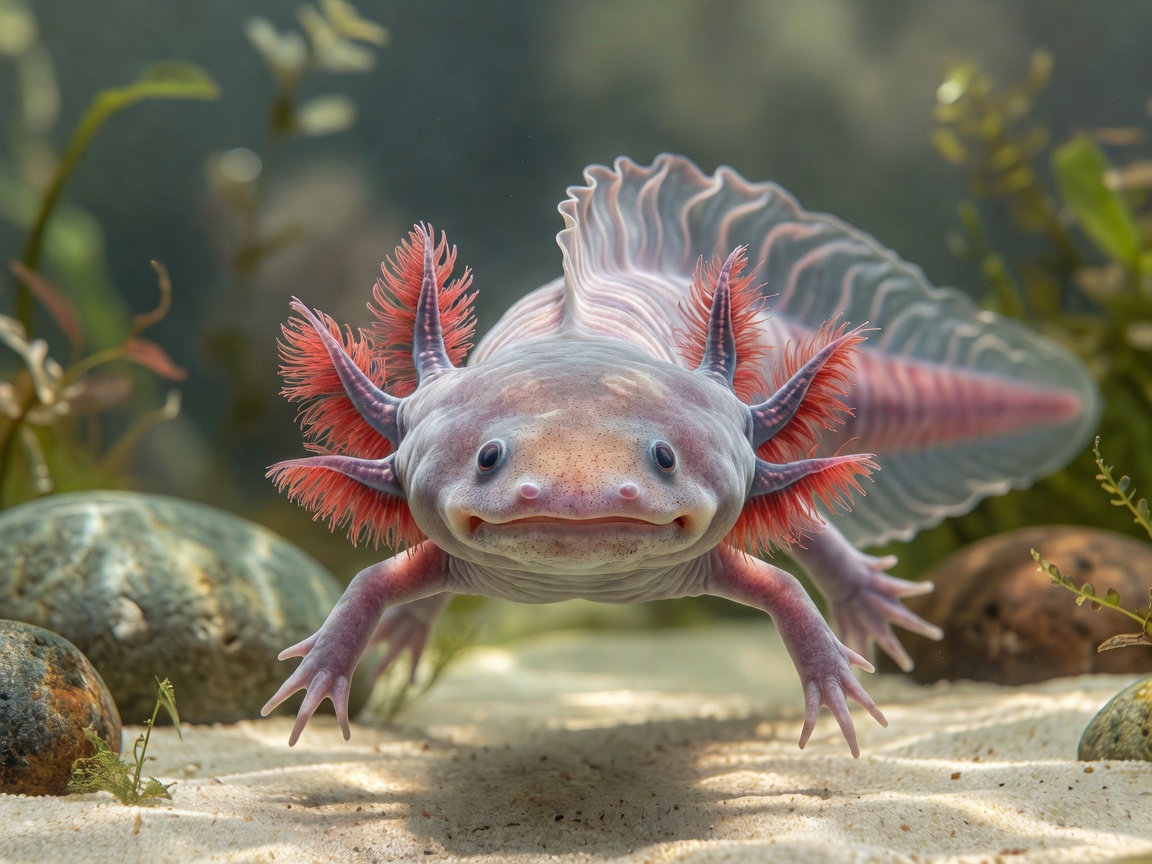
The Mexican axolotl (Ambystoma mexicanum) is biomedical science's supreme model organism for epimorphic regeneration. While humans and other mammals respond to traumatic amputation by synthesizing dense collagen fibril matrices (scar tissue), the axolotl completely regenerates fully functional limbs, cardiac ventricles, spinal cord segments, and optic nerves with zero loss of function.
The Blastema Engine & Wound Epidermis
Following limb amputation, the wound healing pathway diverges completely from mammalian wound closure:
- Apical Epithelial Cap (AEC): Within 24 hours, epithelial cells migrate over the amputation stump without forming a fibrotic dermis, secreting key morphogenetic signals (FGF8, Wnt).
- Macrophage Orchestration: Salamander immune macrophages clear cellular debris without triggering inflammatory fibrogenesis.
- Blastema Proliferation: Mature muscle, cartilage, and Schwann cells near the cut dedifferentiate into lineage-restricted progenitor cells, aggregating into a blastema growth cone that faithfully re-executes embryonic limb bud development.
🧬 Giant Genome & Neoteny
The axolotl maintains a colossal genome containing 32 billion base pairs—over ten times the size of the human genome. It retains lifelong juvenile traits (neoteny), permanently remaining in its aquatic larval state with external gills and perpetual regenerative competency.
Translational Medicine Applications
By studying how axolotl macrophages inhibit TGF-beta signaling pathways that otherwise force scarring in humans, regenerative medicine researchers aim to induce blastema-like regeneration in human burn victims and amputees.
Nature Scientific Reports Publication
Read the definitive genomic analysis mapping the complete axolotl genome assembly and limb regeneration transcriptomics on Nature.com.
View Nature Genome Report →