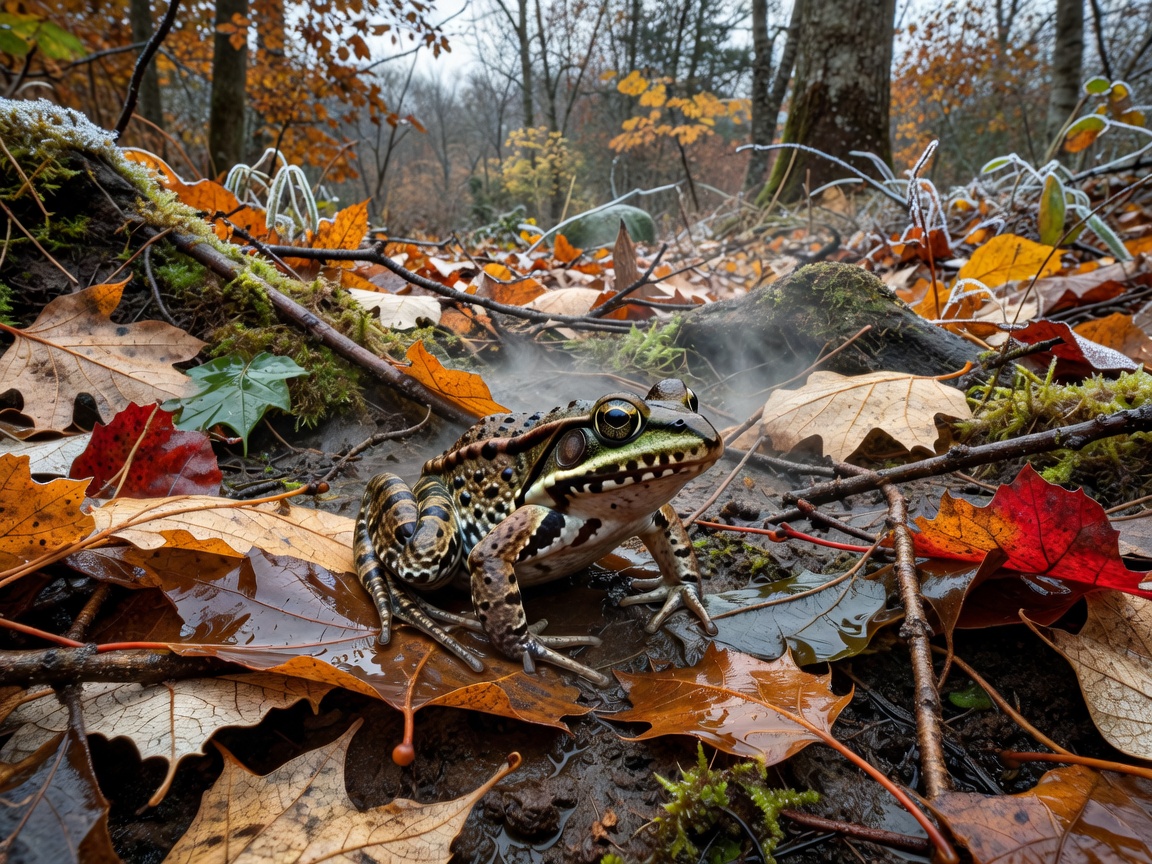
Across interior Alaska and northern Canada, the wood frog (Lithobates sylvaticus) endures winters where temperatures plunge below -18°C. While other ectothermic amphibians migrate underwater or dig beneath frost lines, the wood frog remains in shallow leaf litter, allowing up to 70% of its total body water to freeze into solid ice.
The Glycogen-to-Glucose Cryoprotectant Surge
The primary mortality factor during biological freezing is ice crystallization inside cells, which lacerates delicate organelle membranes and causes severe intracellular dehydration. The wood frog prevents this through an emergency endocrine reflex:
- Ice Nucleation Trigger: As ice crystals touch the skin, sensory nerves stimulate the liver to trigger massive glycogenolysis.
- Hyperglycemic Flooding: Within hours, blood glucose levels skyrocket from normal levels (5 mmol/L) to over 300 mmol/L (an osmolarity that would cause fatal diabetic ketoacidosis in mammals).
- Intracellular Vitrification: Glucose acts as a natural cryoprotectant, forcing water to freeze exclusively in extra-cellular spaces while cellular interiors transition into an amorphous glass state (vitrification).
❄️ Zero Metabolic Pulse for 200+ Days
During peak winter stasis, the wood frog's heartbeat ceases completely, blood circulation halts, and brain electrical activity flatlines. When spring temperatures thaw the terrain, the heart resumes beating spontaneously within 60 minutes, and the frog resumes normal breeding behavior within 24 hours.
Human Cryopreservation Implications
Transplant surgeons and cryobiologists study the wood frog's glucose transport proteins (GLUT2) and nucleating proteins to extend the shelf-life of donor human hearts and livers from mere hours to indefinite cryogenic storage.
Journal of Experimental Biology Reference
Access the research paper on freeze tolerance adaptations and urea accumulation in Alaskan wood frogs published via the Journal of Experimental Biology.
Read JEB Research Article →