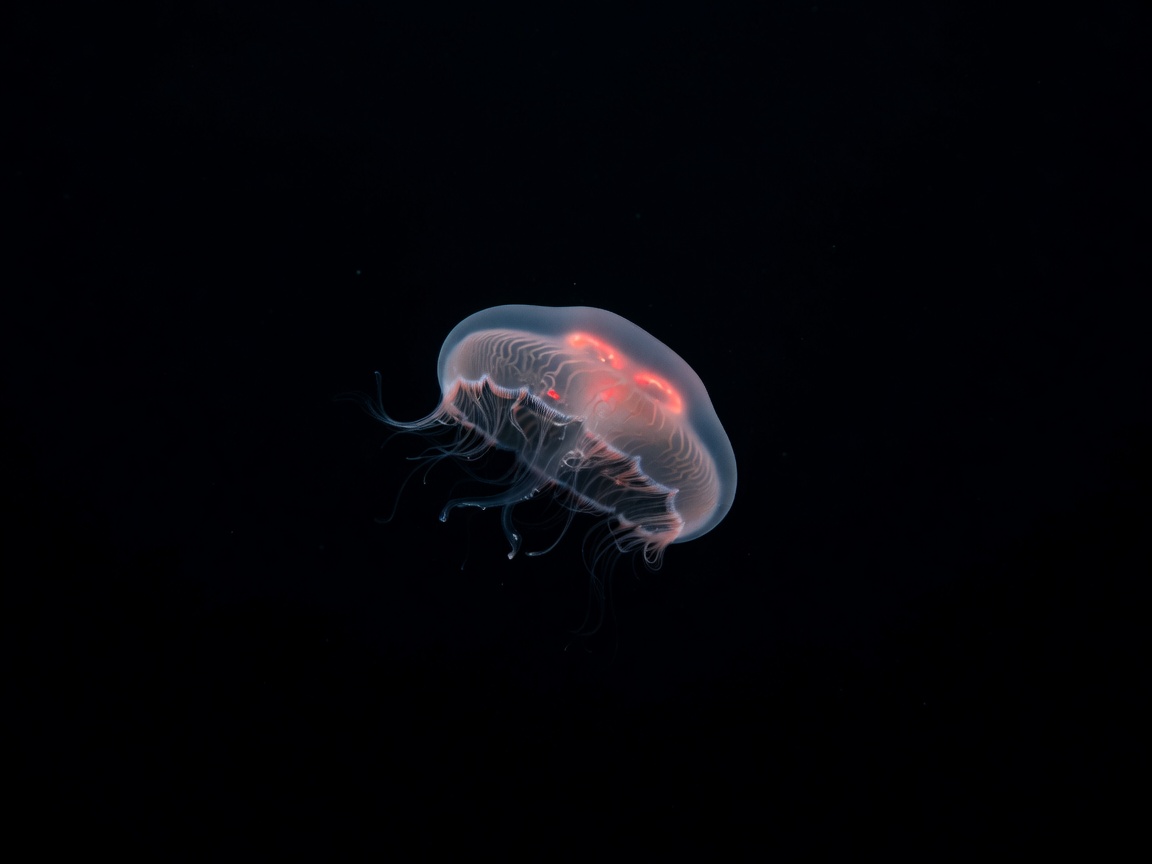
While virtually all multicellular organisms follow an irreversible ontological trajectory from zygote to sexual maturity and eventual senescence, the hydrozoan Turritopsis dohrnii breaks the fundamental law of biological aging. When subjected to physical stress, nutrient deprivation, or cellular aging, it can reverse its adult medusa body back into a juvenile clonal polyp colony.
The Molecular Trigger: Transdifferentiation
Transdifferentiation is a rare non-stem cell transformation pathway wherein fully differentiated somatic cells (e.g., exumbrellar muscle, gastrovascular lining) lose their specialized characteristics, revert into an uncommitted state, and then re-differentiate into completely different cell types required for polyp development.
🔬 Step-by-Step Cycle of Rejuvenation
1. Medusa Degeneration: The mature umbrella structure collapses, resorbing tentacles and manubrium tissues into a spherical ball of tissue (cyst).
2. Cellular Reprogramming: Epigenetic markers are remodeled, and genomic pluripotency factors are upregulated across somatic lineages.
3. Stolon Formation: The cyst adheres to benthic substrate and extends crawling stolons.
4. New Colony Emergence: A genetically identical polyp colony sprouts, eventually budding hundreds of brand new juvenile medusae.
Comparative Longevity Analysis
| Species | Lifespan Model | Cellular Limiting Factor |
|---|---|---|
| Turritopsis dohrnii | Potentially Immortal (Indefinite) | None (Overcome via Transdifferentiation) |
| Homo sapiens | ~120 Years max | Hayflick Limit / Telomere Depletion |
| Hydra vulgaris | Indefinite (Non-senescent) | Continuous FoxO-driven Stem Division |
Genomic Sequencing Literature
Discover the published comparative genomics of Turritopsis dohrnii and non-immortal hydrozoans detailing DNA repair mechanisms via the Proceedings of the National Academy of Sciences (PNAS).
Read PNAS Genomics Paper →