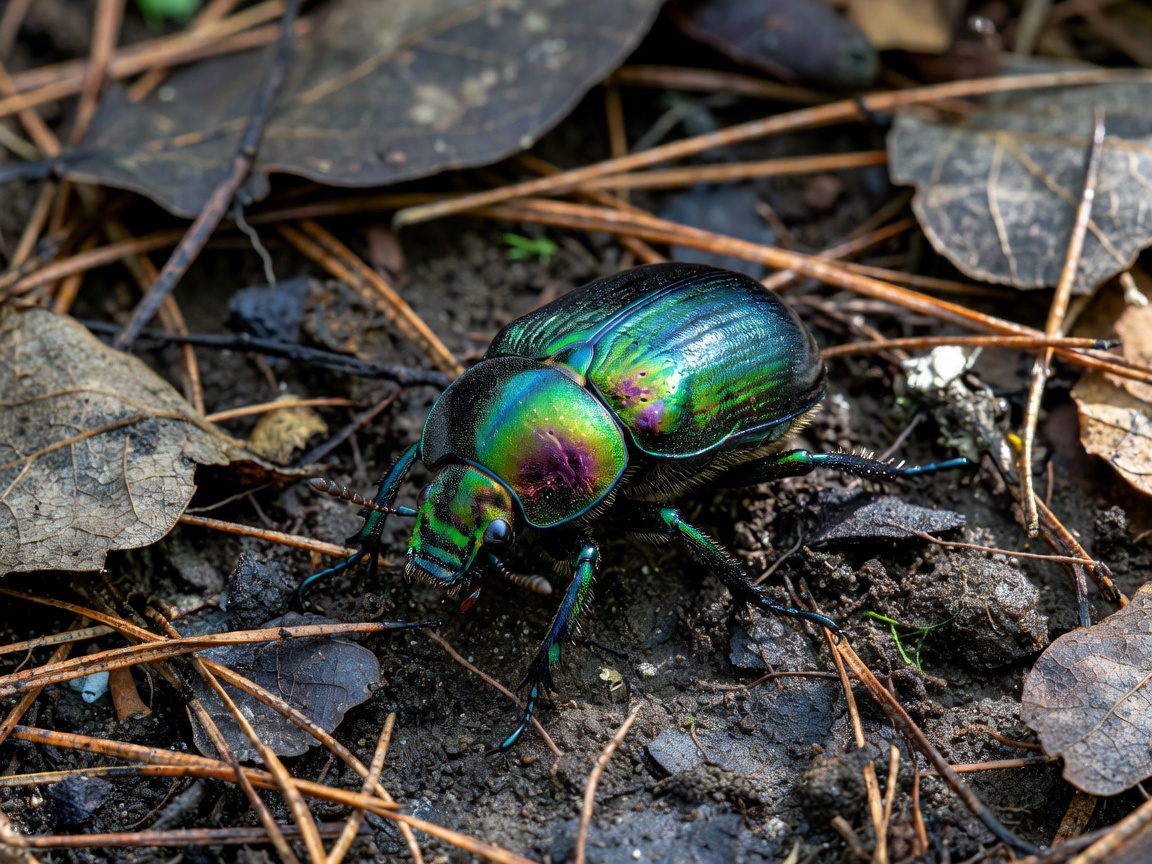
The bombardier beetle (Brachinus crepitans) features one of the most chemically sophisticated defensive weapon systems on Earth. When attacked by predators such as toads or ants, the beetle does not merely bite or secrete noxious fluids—it manufactures an active, pulsating chemical explosion inside its abdomen and directs the boiling spray with surgical precision.
The Internal Combustion Architecture
The beetle maintains two separate internal storage reservoirs connected by a muscular sphincter valve:
- Reservoir Chamber: Contains an aqueous solution of 25% hydrogen peroxide (H2O2) and 10% hydroquinones. In this chamber, the chemicals remain completely stable and inert.
- Reaction Combustion Chamber: Lined with specialized secretory cells providing high concentrations of catalase and peroxidase enzymes.
💥 The Exothermic Cascade Equation
When the valve contracts, reactants flood the catalytic chamber. Catalase immediately decomposes hydrogen peroxide into water and oxygen gas, releasing substantial heat. Peroxidases simultaneously oxidize hydroquinones into p-benzoquinones. The temperature surges instantaneously to 100°C, converting approximately one-fifth of the liquid to high-pressure steam that blasts the noxious quinone spray out of the pygidial nozzle.
Pulsed Combustion Physics
High-speed synchrotron X-ray imaging reveals that the beetle does not eject a continuous stream. Instead, the sudden rise in internal steam pressure forces the entry valve shut, pausing the reaction until pressure drops and new reactants enter. This produces rapid pulsed discharges at rates of 500 pulses per second, preventing the beetle's own abdomen from being thermally cooked.
Science Journal Biomechanics Reference
Access the definitive Science Magazine study utilizing high-speed X-ray diffraction to document the passive valve mechanism in the bombardier beetle's combustion chamber.
Read Science.org Publication →